Editor’s Note:
The author of this piece is Emma Gustavsson, an independent researcher and philosophy student in Stockholm, Sweden. She serves on the editorial board of Tidskriften Ordning, and works at the intersection of value-form theory, critical theory, and the history of political thought. Her personal website is www.Kommunismen.org.
A PDF of this piece can be found at the bottom of the page.
Introduction
There is a conversation I seem unable to avoid. It returns at my parents’ kitchen table and in the late hours when my partner and I cannot sleep. At some point I say that it does not finally matter which of the parties forms the next government, because the social order that follows the election will be recognizably the order that preceded it. The reply is always quick and a little wounded. My partner, who disagrees with me about most things political, says that if the parties are interchangeable then politics is a fiction, and that I have talked myself into a position from which nothing can be done.
I do not think they are mistaken about what they defend. The differences between governments are real, and they are felt in places where abstraction has no purchase: in a clinic or a deportation order, in the difference between a rent that can be paid and one that cannot. To say that these differences do not matter would be both false and cruel. But this was never my claim. What I have been trying to say is that beneath the visible contest of programs there is a level of social life that no program reaches, and that this level persists, intact, through every alternation of the parties that manage it.
This article is not, in the first instance, an argument for revolution. Neither is it a critique of electoral politics as such. I have no wish to tell my friend that his evenings of canvassing were wasted, or to confirm my partner’s suspicion that I have reasoned my way into paralysis. The question I want to pursue lies between reform and rupture. If a given social order reasserts itself regardless of who administers it, then the interesting question is not whom we should elect but what kind of order possesses this strange capacity to survive its own elections. What are the structures that make such persistence possible? Why is capitalist society so difficult to govern out of existence, even by those who sincerely wish to? These are questions about domination, and they are the questions of this article.
To pose them properly, one has to set aside a familiar picture. In ordinary speech, and in much of the press, capitalism names a set of policies or a cluster of institutions: private property, the joint-stock company, the firm, and the market understood as a place where things are bought and sold. In this reformist picture, to change capitalism would be to change the policies and reform the institutions, and the reason this proves so hard is simply that powerful people resist it. There is truth in this, but it remains on the surface. It mistakes the symptoms of a relation for the relation itself. Capitalism, in the sense I mean to develop here, is not primarily an institution or a body of law. It is a social relation, and more precisely a relation governed by the self-valorization of value, by the compulsion that money be advanced in order to return as more money. Value that valorizes itself [sich verwertender Wert] is the master of this society in a sense that no minister can be, though this mastery is the form of an inversion [Verkehrung] and not the rule of a subject standing behind the process. Institutions and laws are the forms this relation assumes and the channels through which it moves, but they are not its basis. One can rearrange them considerably and leave the relation untouched, which is precisely what the alternation of governments tends to do.
This is why Marx insisted that what has to be explained about such a society is not only how it produces things but how it reproduces itself. A society does not persist by accident. The worker who sells her labor in order to live, and who in living renews the need to sell it tomorrow, reproduces in the same motion the relation that compels the sale. Capital, for Marx, presupposes the conditions of its own existence and reposits them through its own movement, so that the result of the process is the restoration of its premise. As Søren Mau puts it in Mute Compulsion “capital presupposes its own presuppositions”. A social order with this character is not held in place by a single institution that one might capture or destroy. It is held in place by the ordinary continuation of social life, by the fact that to live within it is already to renew it. In this sense the Leninist demand to smash the state names a necessary moment and not the whole of the problem. A relation reproduced through the ordinary continuation of social life is not abolished by the capture or destruction of any single institution, the state included. This is why the language of domination is pertinent.
So I want to ask the question directly: In what ways does capitalism dominate? The phrasing is deliberate. My argument in what follows is that capitalist domination is not the work of a single mechanism. It operates on several interconnected levels at once, each with its own logic and its own mode of compulsion, and to see this clearly we will have to descend below the level of the visible contest, to the relation that the contest presupposes, and from there trace the forms in which that relation makes itself felt as a power over those who live under it.
Most critiques of capitalism that reach a wide audience are critiques of exploitation, of inequality, or of ownership. Think of the sort of comments such as “the issue is not that the Sweden Democrats and the right keep winning, the issue is that the 1% own basically everything.” They are not wrong, but they leave the question of power untouched. A person can grant that capitalism exploits workers, that it concentrates wealth in few hands, and that the means of production belong to a small class, and still have said nothing about how capitalism exercises power over those who live within it. Exploitation names a transfer, the appropriation of surplus labor by those who do not perform it. But exploitation so understood remains a category of classical political economy. Ricardo too could state the appropriation of surplus labor as a magnitude. What classical political economy cannot state, and what the concept of domination is needed to name, is the command and constraint through which that appropriation is secured. Domination names the capacity to direct, limit, and compel the conduct of others. The two are inseparable in practice, since the capacity to compel is what makes the transfer possible, and the brief I am following throughout treats them as moments of one process.(1) But they are not identical, and the difference is consequential, because a society could in principle redistribute the proceeds of exploitation while leaving its structures of domination intact. To ask how capitalism dominates is therefore not a roundabout way of asking how it exploits. It is a separate question, and it has a layered answer. This answer is crucial in how to construct a definitive break with capital as a whole.
Here Bruno Leipold’s reconstruction of Marx offers a useful point of departure. In Leipold’s reading, capitalist domination is not one thing but three. There is the personal domination that the capitalist exercises over the worker. There is the structural domination secured by the background of property that leaves the worker no master-free option. And there is the impersonal domination of the market, to which capitalists and workers are alike subordinated.(2) I take these three not as a list of separate evils but as moments of a single social relation, each presupposing and reinforcing the others.(3) Setting them out in sequence is a matter of exposition. In the world they are never apart, as the model set out below is meant to show.
Personal Domination
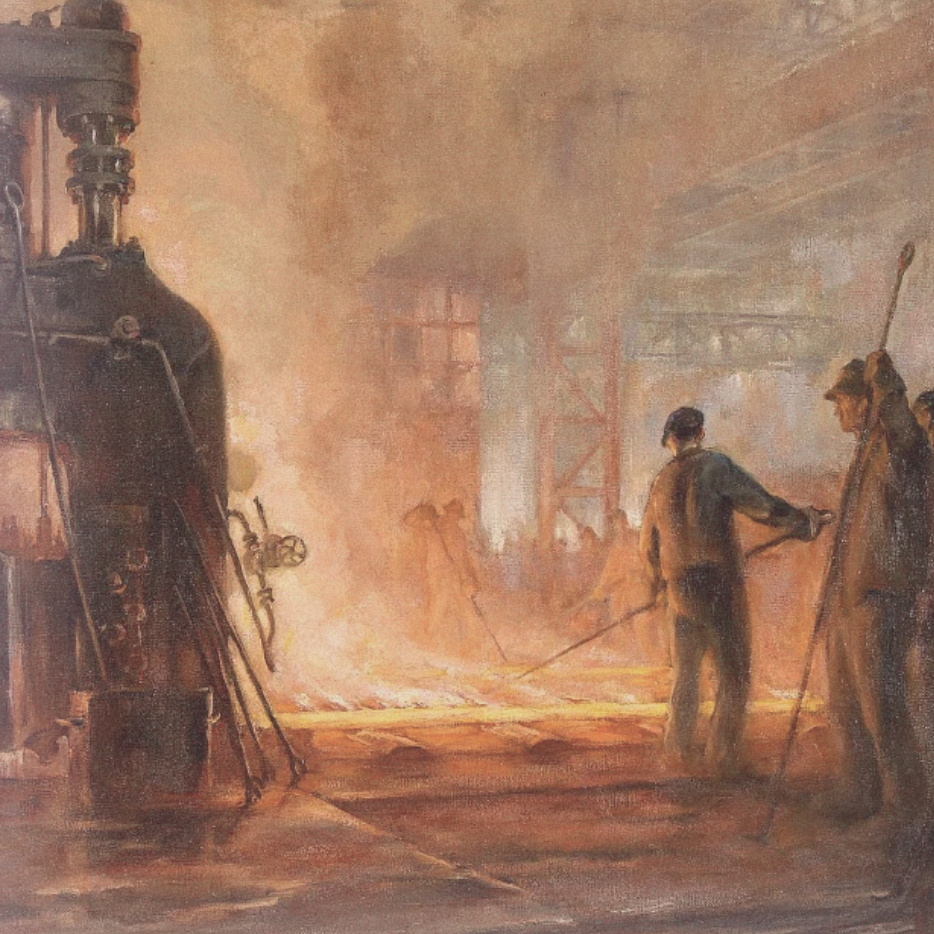
The first and most visible form is personal domination, and its natural home is the workplace. Capitalism presents itself, at the point where worker and employer meet, as a meeting of equals – which they really are. Two owners of commodities confront one another in the market, one with money to spend and one with labor power to sell, and they conclude a contract that the law treats as freely entered by formally equal persons. Nothing in the transaction looks like subjection. At the threshold of production this equality does not lapse. It is realized. The freedom and equality of the exchange are not a surface that the hierarchy of production then belies. They are the form in which that hierarchy is contracted, and they remain in force precisely as the worker is set to work under command. The worker who has signed the contract walks into a space organized as a hierarchy, in which managers and owners issue instructions and the worker is obliged, by the terms of the very agreement that established his freedom, to obey. Marx marks the passage with some irony. We leave the noisy sphere of exchange, where everything happens in the open and on the surface, and follow the two parties into the hidden abode of production, where the former money owner now strides ahead as a capitalist and the possessor of labor power follows as his worker.(4) This is the form of domination that common sense recognizes most readily, because it appears as the direct rule of one person over another. It has a long catalog of concrete expressions: the surveillance that tracks keystrokes, badge swipes, and bathroom breaks; the managerial authority that assigns, reassigns, and reprimands; the disciplinary procedure that formalizes the power to punish and dismiss; and the performance target that converts the open-ended obligation to work into a measurable quota whose failure carries consequences. None of this is incidental to capitalist production. The employer who buys labor power for a stretch of time has bought the right to set it in motion and to determine the manner of its use, and the apparatus of command exists to make that right effective.
It would be a mistake, though, to let the analysis rest here, as if capitalism were essentially a regime of petty workplace tyranny that could be cured by gentler managers and better human-resources policy. The authority of the manager is real, but it is not the ground of the relation and not what reproduces it. The worker submits to command not because the manager is personally stronger but because the alternative to submission is the loss of access to wages, and the loss of access to wages is, for someone who owns nothing else to sell, tantamount to starvation. Personal domination, in other words, rests on a condition that lies outside the workplace and precedes the contract.
Structural Domination
Why does the worker present himself at the factory gate or the office door at all, ready to accept terms he did not write? The answer returns us to the condition that the labor contract presupposes but does not itself create: dispossession, the separation of the mass of people from independent access to the means of subsistence and the means of production. Marx tells the story of how this separation came about in the chapter on so-called original accumulation, the historical process by which producers were severed from the land and the tools through enclosure, expropriation, and a body of bloody legislation that criminalized the dispossessed and drove them toward wage labor.(5)
It is tempting to read this as an origin story, a founding act of violence now safely behind us. That reading misses the point. The decisive fact is not the brutality of the founding but the structure it left in place. Once the great majority hold no independent means of life, they can obtain the means of life only by selling the one commodity they reliably possess, their capacity to work. This is the sense in which the worker under capitalism is doubly free. He is free in the legal and welcome sense that he may dispose of his labor power as his own and is bound to no particular master. And he is free in the bleaker sense of being free of property, free of any object through which he might support himself without entering the market at all.(6) These are not two freedoms, one real and one nominal, but one determination read from two sides. The liberty to dispose of one’s own labor power and the compulsion to sell it are given in a single stroke, so that the form in which this society grants the worker his freedom is identical with the form in which it delivers him to the market. What presents itself as the liberty to choose an employer is the necessity of choosing one. No individual capitalist holds a whip over the worker and drives him to the labor market.(7) The worker arrives there on his own feet, under a compulsion that issues from his situation rather than from any person’s command, and finding the gate already open is precisely what makes the compulsion so easy to mistake for choice.
What gives this structure its durability is that it is reproduced by the very activity it compels. Capitalist production does not merely make commodities. As Marx observed, it produces and reproduces the relation itself, on one side the capitalist, on the other the wage laborer, and it does so continuously, as an ordinary outcome of its ordinary operation.(8) Mau captures this self-sustaining quality in a compact formula: capital presupposes its own presuppositions.(9) The conditions capital needs in order to function, above all a population that owns no means of subsistence and must therefore sell its labor, are not supplied once at the beginning and then consumed. They are produced again and again by capital’s own movement. The wage the worker earns is spent on the means of subsistence (and today, spent on various other things – which is beyond the scope of this here article) and is gone, and the worker returns to the market the following day in the same condition of dependence that sent him there in the first place. People reproduce, through the prudent and unremarkable activity of earning a living, the very separation that obliges them to earn it. Structural domination is not imposed on social reproduction from outside. Instead it is the form social reproduction takes when the means of life are reached only through the wage.
Impersonal Domination
There is a third level, which might be the most distinctive thing about capitalism as a form of social power. Mau gives it the name mute compulsion, a phrase he draws from Marx’s remark that the mute compulsion [stummer Zwang] of economic relations completes the worker’s subjection so that direct extra-economic force becomes the exception rather than the rule.(10) What is striking about this level is that domination here increasingly appears without a visible dominator. No individual capitalist controls the market. The owner of a firm is not a sovereign who legislates prices, sets the rate of profit, or decrees the pace of technical change. He is as much a subject of the market as anyone, and yet everyone within the market becomes subject to its imperatives all the same. One could say that the sovereign head has been struck off. The personal ruler who once stood at the summit has no counterpart here, and capital is in this sense an acephalous monster.(11)
Those imperatives have familiar names: competition, the pressure to raise productivity, the discipline of cost reduction, the drive to accumulate, and the demand for growth without which a capital ceases to be a capital. The capitalist who declines to cut costs and raise output is undersold and punished by the same market that rewards the capitalist who does not decline. Competition is the mechanism by which capital’s immanent laws are imposed on the individual capitalist as external coercive laws, laws he experiences not as his own preference but as a force confronting him from without.(12) This is why the capitalist class cannot simply choose to be humane. A firm that pays above the going rate, works its employees more gently, or forgoes a profitable cruelty is, other things equal, competing on worse terms than a firm that does none of these things, and over time the market selects against it. Capitalists are subordinated to the system they personify.(13) The market consequently appears as an objective force, a fact of nature with which one must reckon, rather than a command issued by an identifiable ruler.
The word “market,” though, is the wrong term to rest on, because it names the surface rather than the source. Beneath competition lies the value form, and beneath the value form lies the peculiar dynamism Marx called value that valorizes itself [sich verwertender Wert], value whose whole tendency is to augment itself without limit. Marx goes so far as to describe value in process, value passing through its successive forms of money and commodity and back to more money, as the automatic subject [automatisches Subjekt] of the entire movement, the real agent of a process in which human beings figure as its functionaries.(14) The formula does not install value as a subject in place of the human one. It registers an inversion [Verkehrung]: value can stand in the place of the subject only because living activity has been reduced to its function. The automatic subject is a subject in the mode of perversion, not an agent standing behind the process. The imperative to accumulate is not, at root, the psychology of greedy individuals, though greedy individuals certainly exist.(15) It is the practical shape taken by self-valorizing value as it works itself out through people who must serve it whether they relish the role or resent it.
This is the level at which my opening disagreement is finally settled. It explains why governments of very different political colors find themselves administering recognizably similar constraints. A government that wishes to remain solvent, to attract and retain investment, and to keep its population employed must maintain conditions favorable to accumulation, and the range of policy compatible with that requirement is narrower than electoral rhetoric ever admits. The constraint is not a conspiracy of bankers, though bankers benefit from it. Where the impersonal compulsion of the value-form is mistaken for the design of an identifiable culprit, the result is not critique but its structural counterfeit. Modern antisemitism, with its figure of the scheming financier who personifies abstract domination, is the most persistent form this counterfeit takes. It is the impersonal pressure of the value form bearing on whoever holds office, which is why the order that follows the election so reliably resembles the order that preceded it.
Why the Three Forms Cannot Be Separated
The three forms are analytically distinct, and I have presented them as if one could examine each on its own. In the social world they are practically inseparable, locked into a set of feedback relations through which each sustains the others. Personal domination in the workplace depends on structural dispossession, since the manager’s authority is effective only because the worker, owning nothing else to sell, has nowhere better to go. Structural dispossession is in turn reproduced through wage labor, since the worker’s daily participation renews the separation that delivers him back to the market each morning. Wage labor is itself shaped by impersonal imperatives, since the demands the manager transmits, the speed required and the costs to be cut, are not the manager’s invention but the local expression of competitive pressures the firm does not control. And those impersonal imperatives continually recreate the workplace hierarchy and the dependence on wages on which personal and structural domination rest. The circle closes, and having closed it turns, which is why no single intervention at one point in it leaves the rest undisturbed.
This is the deeper meaning of Marx’s insistence “that capital, rather than being a thing, is a social relation between persons that is mediated by things.”(16) Capital is not a stock of machines, a sum of money, or a quantity of goods, although it appears in all of these guises. It is a relation that organizes how people produce, what they must do to live, and how their activity is coordinated behind their backs, and it is a relation that reproduces itself. To call capitalism a social relation rather than an economic arrangement is to say that it is not a static system that could be left running while its parts are swapped out, but a dynamic process whose very operation regenerates the conditions of its own continuation. Domination, on this account, is not something capital has but something capital is: the name for a relation that secures its own continuation through the activity of those it binds.
A Model of the Whole
It helps to hold the three forms together in one picture, the picture that the next section of this article sets out as a diagram. At the surface lie three sites, each with its characteristic form of power. The workplace is governed by personal domination, the direct authority of those who command over those who obey. The society-wide dependence on wage labor is governed by structural domination, the necessity that drives the propertyless to the market. The field of competition and accumulation is governed by impersonal domination, the compulsion of value that masters capitalists and workers alike. These are the visible levels, the ones at which the experience of being dominated actually occurs.
Beneath them lie the foundations. Historically, the relations were established by original accumulation. But the violence of the founding is no longer the principal thing that keeps the relations in place. Domination today is reproduced far less through overt force and far more through what might be called accumulated subsumption, the sedimented result of centuries of capitalist development, in which a separation that once had to be imposed at the point of a bayonet has settled into the unremarkable background of ordinary life. Most people are delivered to the wage not by soldiers but by the simple absence of any alternative, an absence so total that it no longer registers as coercion at all.
Two further mechanisms hold this structure in place, and because they are easily confused it is worth marking the difference sharply. Neither is in the first instance a matter of what individuals happen to believe. The first is fetishism. Fetishism is generated by the value-form itself, prior to anyone’s wish to defend the existing order. It causes the social relations among producers to appear as relations among things, so that the value of a commodity looks like a natural property of the object rather than a crystallization of social labor, and so that the movement of prices and markets confronts people as a quasi-natural process with laws of its own.(17) Its effect is to make capitalist domination appear natural and objective, a feature of the world rather than a historically specific arrangement that human beings produce and could in principle dismantle. In the third volume of Capital this appearance reaches its most finished form in what Marx calls the trinity formula, where capital, land, and labor present themselves as three independent sources of profit, rent, and wages, the social relation by now wholly dissolved into the apparently natural fertility of things.(18) Fetishism is not a mistake that a sufficiently clever person can see through by an effort of will. It is an objective feature of how a society organized by value necessarily appears to those who live in it.
The second mechanism is ideology, and it operates differently. Ideology is produced and reproduced through institutions: through culture, education, the media, and the exercise of political power. Where fetishism is the spontaneous appearance thrown up by the value-form, ideology is the elaborated set of interpretations that justify and normalize capitalist social relations, the stories a society tells about why things are as they are and why they could not easily be otherwise.(19) The two are related, since fetishism furnishes the raw material, the seemingly natural surface, on which ideology then builds. But they are not the same. Fetishism arises from the form of value, with no author and no interest behind it. Ideology is the work of institutions that have interests, and it can be contested, exposed, and fought in a way that the fetish character of the commodity, which is not a falsehood but a real appearance, cannot simply be argued away.
Conclusion
So, in what ways does capitalism dominate? It dominates personally, in the relations of command through which the workplace is run and the employer’s purchased authority is made to tell. It dominates structurally, through the dispossession that strips people of any independent means of life and the dependence that returns them, day after day, to the market for a wage. And it dominates impersonally, through the compulsions of value and competition that subordinate the capitalist no less than the worker to an accumulation neither of them controls. These are not three rival answers among which we must choose the truest. They are three aspects of one relation, and the relation is powerful because they hold each other up. The final thing to say is the most important. Capitalist domination is formidable above all because it does not, for the most part, confront individuals as an external force standing over against them. It is reproduced through ordinary social activity itself, through the very acts by which people meet their needs and conduct their lives. The worker who takes the job, the manager who enforces the targets, the investor who seeks a return, and the consumer who buys at the lowest price are not breaking the rules of some imposed system. They are following the only rational course their situation offers, and in following it they renew the situation.
It does not follow that to undo this domination would be to arrive at freedom. That the relation is reproduced through us, rather than imposed upon us, unsettles the very concept by which its overcoming is usually named, and it is not obvious that what lies on the far side of this domination can still be called freedom at all. Capitalism dominates not only over people, but through them. The worker, the manager, the consumer, the investor, and the voter all participate in reproducing relations whose logic exceeds their intentions. The remarkable achievement of capitalist domination is that it persists not despite our daily activity, but through it.
How “we shoot ourselves out of here” is a question which I have contemplated a lot recently.(20) To whomever might find these contemplations of interest can read my paper that I will be presenting at the Society for Marxist Studies in Copenhagen, Denmark, in which I examine whether emancipation can still be understood as freedom at all.
Footnotes & Reference List
1.) Bruno Leipold, Citizen Marx: Republicanism and the Formation of Karl Marx’s Social and Political Thought (Princeton, NJ: Princeton University Press, 2024), esp. chaps. 3 and 6.
2.) Bruno Leipold, Citizen Marx: Republicanism and the Formation of Karl Marx’s Social and Political Thought (Princeton, NJ: Princeton University Press, 2024), esp. chaps. 3 and 6. Leipold reconstructs Marx’s critique of capitalist unfreedom around the personal domination the capitalist exercises over the worker, the structural domination secured by property relations, and the impersonal domination of the market to which capitalists and workers alike are subject; he also insists that domination has an explanatory link to exploitation rather than being reducible to it.
3.) I borrow Leipold’s tripartition as a descriptive ordering of capital’s modes of compulsion and not as an endorsement of the freedom-concept that underwrites it. Whether the determinate negation of this domination yields a positive freedom, or only the non-identity of the concept, is a question this essay holds in abeyance and pursues elsewhere.
4.) Karl Marx, Capital: A Critique of Political Economy, vol. 1, trans. Paul Reitter, ed. Paul North (Princeton, NJ: Princeton University Press, 2024), 121–51.
5.) Marx, Capital, 1:650–91.
6.) Marx, Capital, 1:121–51. On the worker as “free in a double sense.”
7.) There are of course cases where this still happens, but they are all the more exceedingly rare.
8.) Marx, Capital, 1:521–33.
9.) Søren Mau, Mute Compulsion: A Marxist Theory of the Economic Power of Capital (London: Verso, 2023). 216-225. Mau distinguishes economic power, the “mute compulsion” of economic relations, from the two other modalities of capital’s power, violence and ideology, and argues that capital reproduces the conditions of its own existence, such that it “presupposes its own presuppositions.”
10.) Søren Mau, Mute Compulsion: A Marxist Theory of the Economic Power of Capital (London: Verso, 2023). 226.
11.) The figure of an acephalous [ἀκέφαλος, headless] power is meant literally: capital commands without a commanding head. I take the adjective and not Bataille’s Acéphale and its mythology; the substantive point is Marx’s, that competition imposes capital’s immanent laws on each capitalist as external coercion.
12.) Marx, Capital, 1:203–72.
13.) Marx, Capital, 1:127.
14.) Marx, Capital, 1:125–28.
15.) Marx, Capital, 1:127-28. Marx, actually says that greed, in the sense of amassing money, is the opposite of what capitalism requires.
16.) Marx, Capital, 1:694.
17.) Marx, Capital, 1:47–60 (the section on the fetish character of the commodity); Michael Heinrich, An Introduction to the Three Volumes of Karl Marx’s Capital, trans. Alexander Locascio (New York: Monthly Review Press, 2012), chap. 3. On fetishism as the objective form of appearance of social relations under the value form rather than a subjective error.
18.) Karl Marx, Capital Volume III, vol. 37 of Marx/Engels Collected Works (London: Lawrence & Wishart, 2010). 801-18.
19.) Marx, Capital, 1:650. At the opening of the chapter on so-called original accumulation, Marx remarks that previous accumulation plays the same role in political economy that original sin plays in theology. The bourgeois origin-myth, which refers the worker’s present dispossession back to an ancestral diligence, is a clear instance of ideology in the sense meant here: an interpretation that legitimates the existing separation by narrating it as deserved.
20.) Kommo, “Vi Måste Skjuta Oss Ut Härifrån,” 1982, streaming audio, Spotify.